


If you have just moved to the UAE, the financial system will look familiar on the surface and quietly different underneath. The cards are Visa and Mastercard. The banks have the names of UK and US banks. The mall escalators play the same advertising. But the eligibility rules, the salary-transfer mechanic, the cheque culture, and the airmiles economics are local — and getting them wrong in your first six months costs more than it should.
This is the entry point for the DubaiPoints Expat Starter track. Each section below has a longer companion guide; the goal of this page is to give you a 10-minute orientation and a path through the rest of the site.
Read this first
The four hardest things for a newcomer to get right, in order of how often they cost real money:
- Salary transfer status. Whether your salary is transferred to a UAE bank — and which bank — determines which credit cards you can apply for, what loan rates you can access, and which one-off transfer bonuses you qualify for. Expats often pick a bank for the wrong reasons (proximity, employer default, reputation from another country) and then can’t access the products they want for the next 12 months.
- Minimum salary tiers. Every UAE credit card lists a minimum monthly salary. It is enforced. A card requiring AED 30,000/month is genuinely off the table at AED 25,000, regardless of your assets, credit history abroad, or willingness to pay an annual fee. Plan around what you can actually qualify for.
- Programme currency value. Skywards Miles, Etihad Guest Miles, FAB Rewards, ENBD Plus Points, ADCB TouchPoints — they are not interchangeable and they are not equally valuable. Earning a high number of the wrong currency is worse than earning fewer of the right one.
- Annual fees and waivers. UAE annual fees are higher than the UK or US (AED 1,500 to AED 3,000 for a premium card is normal) but waivers are common. The first-year fee is almost always waived. The second-year fee is what determines whether the card is actually worth keeping.
The companion guides
Each link below is a longer, evergreen reference. Read them in order if you have just landed; jump straight to the topic you need if you have been here a while.
- Choosing your first UAE credit card — how to read a UAE card listing, what eligibility actually means, and the three cards a new expat should consider before anything else.
- UAE banking basics: salary transfer, accounts, and how it actually works — what salary transfer is, why it matters, what an “AECB credit report” is, and how to open an account before your residency visa lands.
- Points 101 — what UAE airmiles and rewards currencies are actually worth — the difference between Skywards, Etihad Guest, and bank-proprietary points; rough fils-per-mile valuations; and the redemptions worth chasing from DXB and AUH.
- The mistakes UAE newcomers make in their first year — ten specific mistakes — from overpaying on FX to choosing the wrong bank for salary transfer — and how to avoid each one.
- What a car actually costs in the UAE — Salik, petrol, registration renewal, insurance and paint protection, and why the card with the highest advertised fuel rate is usually the wrong one once the monthly cap is accounted for.
Card-pairing matrix
Most UAE expats end up holding two cards by the end of year one — one that covers everyday everything-spend, and a second that earns the right currency for the trips they actually take. The pairings below are calibrated by salary band against the cards we currently track in our card database. Every figure cited is from the card’s published Key Facts Statement and the linked review.
The pairings are not endorsements of one bank over another — they are worked examples of how two cards complement each other on fees, FX, earning category and welcome bonus. Always check the full comparison table against your own spend before applying.
| Pair | Salary band (AED/month) | Why they pair | The one caveat |
|---|---|---|---|
| Cashback default + dining specialist — CBD One (AED 0 fee, AED 5,000 min salary) + Mashreq Cashback (AED 0 fee, AED 5,000 min salary) | 5,000 – 12,000 | Two no-annual-fee Visas with no salary-transfer requirement. CBD One caps cashback at AED 135/month on ~24 named online merchants (noon, Careem, Talabat, Netflix, Spotify) above AED 5,000 monthly spend. Mashreq Cashback pays 5% on all dining (no cap) and 1% on everything else. Use CBD One for subscriptions and delivery, Mashreq Cashback for restaurants and the rest. | Mashreq’s 1% on “everything else” drops to just 0.15% on utilities, fuel, telecom and government since the 13 June 2026 category cut (it paid 0.33% before then). Park bill payments on CBD One’s bank app instead. |
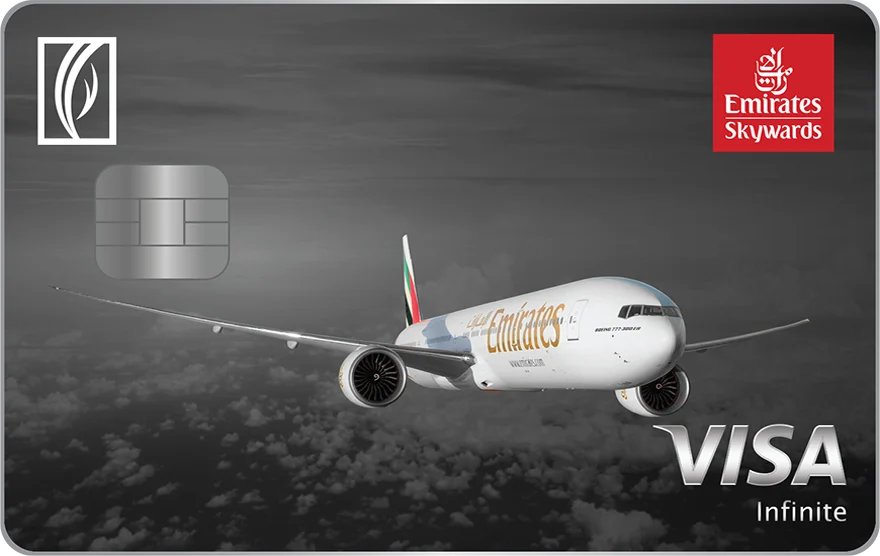
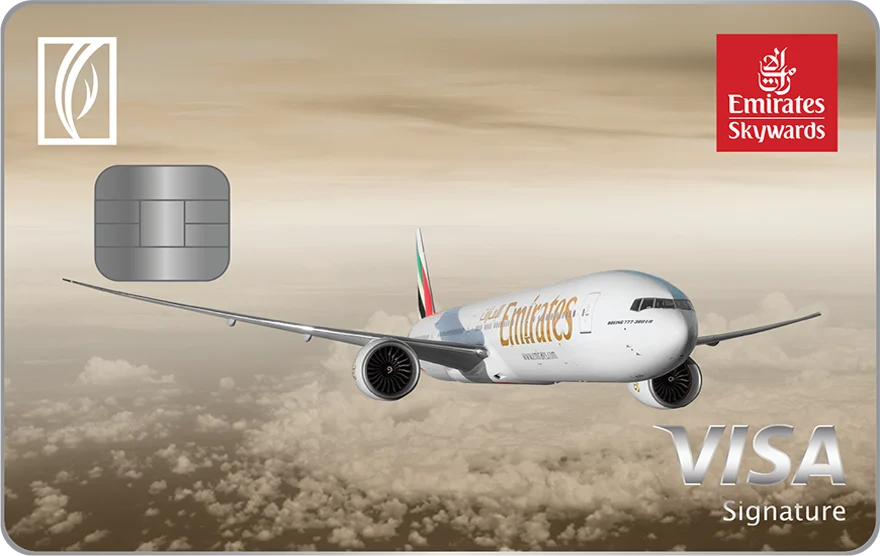
| Free everyday + Skywards flagship — CBD One (AED 0 fee, AED 5,000 min salary) + Emirates NBD Skywards Infinite (AED 1,575 annual fee, AED 30,000 min salary, salary-transfer optional) | 30,000+ (Emirates flyer) | CBD One covers the categories the Skywards Infinite earns weakly on (subscriptions, delivery, cinema). The Skywards Infinite then earns 2 Skywards Miles per USD on travel and dining, 1.5 on international, 1 on everything else, with a 100,000-mile welcome and unlimited DXB/AUH lounge access via DragonPass. The Infinite is fee-waived in year one and re-waived from year two on AED 100,000 of annual spend. | The Skywards Infinite carries a AED 3,148.95 joining fee in year one (AED 1,575 from year two). Confirm the joining fee is genuinely waived in writing before activation — the welcome bonus is gross of the fee, not net. |
| Free everyday + Etihad flagship — CBD One (AED 0 fee, AED 5,000 min salary) + FAB Etihad Guest Infinite (AED 2,625 annual fee, AED 30,000 min salary, salary-transfer optional) | 30,000+ (Etihad flyer) | Same logic as the Skywards pair but currency-matched for the AUH-based flyer. The FAB Etihad Guest Infinite earns 7 Etihad Guest Miles per AED 10 on travel and partner brands, 6 on international, 3.5 on everything else. Welcome offer is 55,000 Etihad Guest Miles on activation (a limited-time +55,000 spend bonus ran to 30 June 2026 and has ended). | The AED 2,625 annual fee is the highest of any pair here and there is no published spend-based waiver from year two. At 7 Miles per AED 10 and our 2-fil baseline, the card needs roughly AED 190,000 of in-category Etihad spend a year to clear the fee on earn alone — the Gold fast-track and companion ticket have to do the rest, so model the maths against your actual travel before signing. |
| Workhorse cashback + Marriott co-brand — ADCB 365 Cashback (first year free, AED 383.25 from year two, AED 5,000 min salary, salary-transfer optional) + Emirates NBD Marriott Bonvoy World Elite (AED 1,575 annual fee, AED 25,000 min salary, salary-transfer required) | 25,000+ (regional traveller, frequent hotel nights) | ADCB 365 pays 6% on dining (including online food orders), 5% on fuel, Salik and digital subscriptions, 3% on groceries, capped at AED 1,000/month total cashback over a AED 5,000 minimum monthly spend — strong on the daily ledger. The Marriott Bonvoy World Elite earns 6 points per USD at Marriott properties, 3 per USD on general spend, with a 200,000-point welcome (100k on activation, 100k on USD 15,000 spend in 90 days), automatic Gold Elite status and a free-night award on each anniversary. | The Marriott Bonvoy World Elite requires salary transfer to Emirates NBD. Switching salary transfer for a hotel co-brand only makes sense if Marriott is genuinely your default chain in the GCC and Europe — otherwise the cashback pair (ADCB 365 + Mashreq Cashback) is a cheaper hold. |
A few notes on the matrix above:
- Every welcome bonus and earn-rate figure traces to the per-card review and to our card database. Co-brand premium-card welcome bonuses are often promoted gross of the joining fee and minimum-spend hurdle — read the per-card “What to do this week” before you apply.
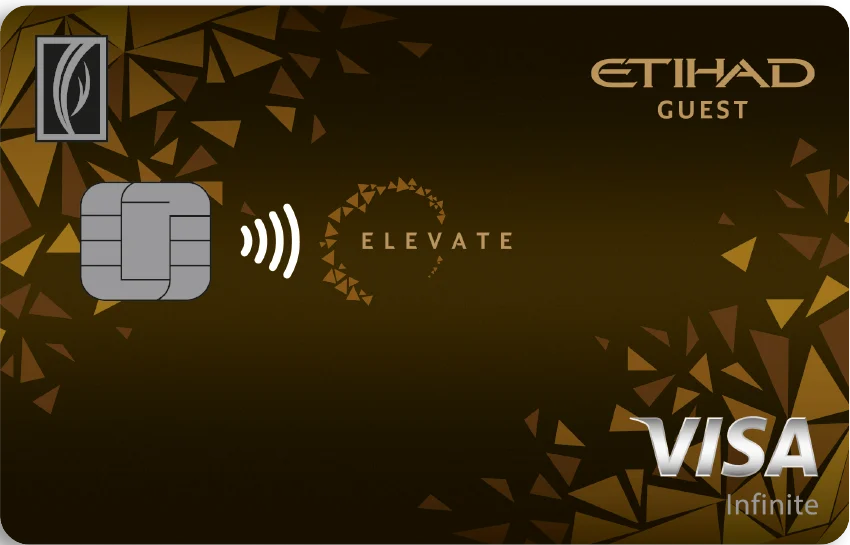
- Salary-transfer required is a hard gate on the Marriott Bonvoy World Elite above, and on two premium cards outside the matrix (the ENBD Etihad Guest Elevate and FAB Elite). “Salary-transfer optional” still means the bank weights internal customers more leniently on AECB-thin files — see the eligibility guide for the full mechanic.
- All figures last cross-checked against our card database on 9 October 2026. The comparison table is the live source and supersedes this matrix on any discrepancy.
First 90 days — week by week
If you want a single sequence to follow:
Week 1 — open the salary account. Open a salary account at a bank with a competitive salary-transfer programme — not necessarily the bank your employer’s HR suggests. Passport, residency-visa stamp and an employer letter are usually enough to open a salary account before your Emirates ID lands; the account upgrades to a full current account once the EID is issued. Use that first week for the rest of the infrastructure too: a UAE mobile number, a UAE address, and the Emirates ID application appointment. Do not apply for a credit card yet.
Week 4 — first salary, first leverage. Once your first salary lands, your bank will start contacting you about credit cards within days. This is when you have leverage. Compare offers across at least three banks before saying yes — the DubaiPoints comparison table sorts every card we cover by minimum salary so you can see what you actually qualify for. Pull your AECB report (AED 84 at etihadbureau.ae) once the bank has reported your salary credit to the bureau and verify nothing is wrong before any application.
Month 3 — one card, one application. Apply for one credit card. One. UAE banks share data via the AECB credit bureau, and applying for three cards in a month is a visible signal that hurts subsequent applications for the next six to twelve months. Pick the first card from the matrix above that matches your salary band and travel pattern — not the card with the glossiest welcome bonus.
Months 4–6 — evaluate the salary-transfer offer. With three months of clean repayment behind you, the live salary-transfer tracker becomes actionable: a switch with a 3- to 12-month tenure commitment unlocks a one-off bonus — AED 200 to AED 9,000 across the five offers we tracked in October 2026, depending on salary band, mostly in cash and often tied to a card or loan. Time any switch around the clawback window from your incumbent bank — see the banking basics guide for the mechanic.
Month 6 onwards — consider the second card. After six months you have an AECB credit history, a salary-transferred relationship with a bank, and a single active credit card with clean repayment history. From there, the second card in the matrix becomes much easier and much cheaper to choose well — the welcome bonus on the co-brand is the single best AED-per-mile rate you will ever earn from that card, so time the application so a known large expense (rent, school fees, a flight) falls inside the qualifying window.
What this guide doesn’t cover
This page is a dispatch hub. Three families of question are out of scope here and are covered elsewhere on the site:
- Salary-transfer offer mechanics — clawback windows, tenure terms, vouchered versus cash components, AECB reporting timing. Live in the salary-transfer tracker and the per-offer detail page.
- Card-by-card eligibility, fee schedules, and Key Facts Statement verification. Live in the 2026 eligibility guide and the per-card reviews linked above.
- Programme valuation methodology — how we arrive at the fils-per-mile figures and when we refresh them. Lives at the valuations methodology page; the value we put on each currency is on the valuations page.
Mortgage rules, Golden Visa eligibility, freezone licensing, and end-of-service gratuity calculations are the business-and-real-estate beat — out of scope for this starter track. See the Golden Visa credit-card guide for the card-and-eligibility angle in the meantime.
What this guide is not
This is not financial advice — it is consumer-information journalism. DubaiPoints is not regulated by the DFSA or the UAE Central Bank. Verify every figure with the issuing bank before applying for a product. If you want personalised guidance, consult a licensed financial adviser. See our editorial policy for our verification standards and how we make money for our funding model.