
UAE credit card approval is a three-variable equation: a minimum monthly salary the issuer publishes for each card, an AECB credit report the bank pulls on every application, and a salary-transfer arrangement that some banks require and most banks weight heavily without naming the weight. Get all three right and approval is usually mechanical. Miss any one and you receive a polite decline with no right of reply.
This guide reads the published eligibility on every priority UAE issuer, lays out what salary transfer actually changes about your application, and explains the AECB friction every new arrival meets in their first six months. AED-first throughout. The figures in the table below come straight from our card database, re-checked on 9 October 2026; the per-card source URL is on each individual card review.
Minimum salary by bank — at a glance
The “salary range across tracked cards” column is the lowest and highest published minimum monthly salary across the cards we track for that issuer. Issuers may publish higher thresholds on private-banking or invitation-only tiers we do not list. Always confirm against the specific card’s Key Facts Statement before you apply.
| Issuer | Salary range (AED/month, across cards we track) | Salary transfer | Notes |
|---|---|---|---|
| ADCB | 5,000 – 25,000 | Required on Betaqti and Essential Cashback; optional on the TouchPoints, LuLu, Talabat, Shukran, Traveller and 365 cards | Broadest mass-market range; TouchPoints Infinite sits at the top at AED 25,000 |
| ADIB (Islamic) | 5,000 | Optional | Sharia-compliant; entry Cashback Visa Covered Card at AED 5,000 |
| CBD | 5,000 | Optional | CBD One is the AED 5,000 entry; premium tiers higher (confirm on KFS) |
| Citi UAE | 8,000 | Optional | Citi Cash Back Credit Card is the published AED 8,000 entry |
| DIB (Islamic) | 5,000 | Optional | DIB Consumer Cashback Reward Card at AED 5,000 |
| Emirates Islamic | 5,000 | Optional | Switch Cashback Credit Card is the AED 5,000 entry |
| Emirates NBD | 5,000 – 30,000 | Required on Visa Infinite, Darna Visa Infinite, Etihad Guest Elevate, Marriott Bonvoy World Elite, U by Emaar Infinite for Emiratis, Diners Club and dnata World | Largest single lineup we track; Skywards Infinite at AED 30,000 with salary transfer not required; the Priority Banking Visa Infinite is invitation-only |
| FAB | 5,000 – 40,000 | Required on FAB Elite | FAB Cashback at AED 5,000; FAB Elite at AED 40,000; FAB World Elite Mastercard is invitation-only with no published minimum |
| HSBC UAE | 5,000 – 12,500 | Optional | HSBC Live+ at AED 5,000 for staff of HSBC-approved employers, AED 12,500 for everyone else |
| Liv. (Emirates NBD) and Wio | Not published | Optional | Digital-bank cards; no minimum salary is recorded in our card database — the app shows what you qualify for |
| Mashreq | 5,000 | Optional | Mashreq Cashback Credit Card at AED 5,000 |
| RAKBank | 20,000 | Optional | We currently track the RAKBANK World Credit Card at AED 20,000; entry tiers are lower on the bank’s full lineup |
| Standard Chartered | 5,000 | Optional | Platinum X at AED 5,000 |
Reading the table. AED 5,000 is the floor for an entry-level cashback or rewards card across almost every conventional and Islamic bank in the UAE. Premium and travel cards step up in bands of AED 12,000, AED 20,000, AED 25,000 and AED 30,000. Above AED 30,000 you are typically in invitation-only or relationship-priced territory (Private Banking, Elite, Priority) where the card is offered to you rather than the other way around.
What “salary transfer” actually means
A salary transfer is a written instruction (a “salary letter” issued by your employer) directing your full monthly net salary into a UAE bank account at a named bank. The instruction is filed with the Wages Protection System (WPS), the Ministry of Human Resources and Emiratisation framework that all UAE employers must use to pay in-country payroll. Once routed, your salary credit appears on the account on the same day each month, and the bank uses that credit history as a primary affordability signal.
Three things follow from this:
- Salary transfer is exclusive. WPS routes your full net salary to one bank. You cannot split salary across two banks under a single WPS file. Switching banks therefore means switching the WPS instruction with your employer’s payroll team — usually a one-month lag before the new bank sees a salary credit.
- “Salary transfer required” is binary. A card that requires salary transfer will not approve you on income proof alone. You need to either already bank with the issuer on a transferred salary or commit to switching as part of the application. The bank typically gives you 60–90 days to land the first salary credit before they downgrade or close the limit.
- “Salary transfer optional” is weighted, not neutral. Even where a bank does not formally require salary transfer, an internal customer (someone whose salary is already with them) tends to clear approval with thinner credit history and a slimmer document pack. Use this if you are new in-country and your AECB file is light.
The clawback realities of switching a salary-transfer arrangement mid-tenure — particularly where a salary-transfer-conditional cash or voucher reward was paid out — are covered on the salary-transfer tracker and on each per-bank deep-dive.
AECB and credit history for new UAE arrivals
The Al Etihad Credit Bureau (AECB) is the UAE’s federal credit bureau, established under Federal Law No. 6 of 2010 and active since 2014. Every bank, telecom and major utility reports your repayment behaviour to AECB, and every credit application triggers an AECB report pull. Your AECB score is a number between 300 and 900; mortgage-grade is broadly 700+ and 620–700 is the band where most credit cards approve without friction (lender cut-offs are not published; these are directional).
For new UAE arrivals, the file is the friction:
- The first six months you are invisible. No AECB history exists for someone who arrived last month, because no bank has reported on you yet. Banks resolve this by either (a) using employer salary certificates and a bank statement from overseas as proxy proof, or (b) declining and asking you to come back after six months on a salary-credited UAE account.
- One missed payment lingers. A single 30-days-past-due flag on a credit card or personal loan typically pulls 30–50 points off the score and stays visible in the report’s 36-month payment history. Two flags inside 12 months and most banks will not approve a new card regardless of salary.
- Mortgage Debt Burden Ratio is the harder cap. The UAE Central Bank’s mortgage rules set a Debt Burden Ratio (DBR) cap of 50% of monthly income across all credit commitments — credit-card minimum payments included. Hold five cards with combined minimum payments approaching 50% of income and the next application meets a DBR refusal regardless of AECB score.
Your own Credit Report, score included, costs AED 84 from Etihad Credit Bureau’s website or app (price read 9 October 2026); we recommend pulling one before any major application (mortgage, high-limit credit card, personal loan) so the bank’s read of your file is not a surprise.
Documentation banks ask for
Across the issuers in the table above, the standard documentation pack for a salaried applicant is:
- Completed application form (online or paper).
- Emirates ID (original sighted at branch, or scanned for digital applications).
- Passport copy with the residence-visa page.
- Latest salary certificate issued by your employer on company letterhead within the last 30 days.
- Latest 3 months of bank statements showing salary credits — at the issuer for an existing customer, or at your current bank for a switcher.
- Security cheque post-dated for the card limit (most issuers).
Self-employed applicants substitute a valid trade licence and typically 6 months of business bank statements, and several banks require an audited P&L or a tax registration certificate. Business-owner thresholds are usually higher than salaried by AED 5,000–15,000 on the same card.
What to do if you are below the minimum
The published minimum is a guideline, not a discrete cliff. If your salary sits AED 1,000–2,000 below the threshold, there is still a viable path:
- Try the secured card route. ADCB, Emirates NBD and Standard Chartered all offer a secured-card variant against a fixed deposit of AED 5,000–15,000. Six months of clean usage builds the AECB file and the bank’s internal score; you can then re-apply for the target card unsecured.
- Apply at the bank that holds your salary. Internal customers clear approval at lower thresholds than the published walk-in number, because the bank already sees salary credits and discretionary spend.
- Wait for a salary-transfer offer. Banks periodically waive the stated minimum salary for new salary-transfer customers in exchange for a tenure commitment and a payback clawback if you leave early. The salary-transfer tracker lists current offers with AED-first values discounted at 20% on vouchered components.
- Avoid the multi-application reflex. Three declines in 90 days pulls the AECB score by enough that the next application — even at the right bank — fails on score. One application, eight weeks’ patience, then the next: that is the order of operations.
Bottom line
A UAE credit card application is read as one document: salary certificate, AECB report and salary-transfer position read together. The AED 5,000 floor is real and broad — almost every issuer’s entry cashback card sits at that line — but the friction lives in the AECB file for new arrivals and in the salary-transfer-required premium tiers (FAB Elite at AED 40,000, several Emirates NBD Infinites at AED 30,000). Pull your AECB report before you apply, file salary-transfer paperwork before you hit “submit” on a salary-transfer-required card, and treat each decline as a 90-day pause rather than a prompt to try the next bank.
For the specific issuer’s process and live offers see the bank hub (ADCB, Emirates NBD, FAB, Mashreq, HSBC). For salary-transfer mechanics and the clawback rules per offer, the salary-transfer tracker is the live source.
Worked example
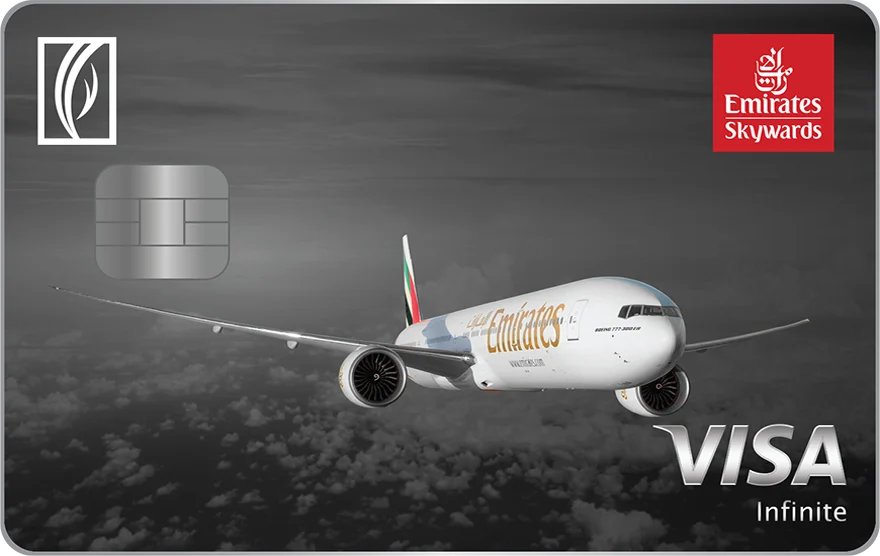
The Emirates NBD Skywards Infinite requires AED 30,000 monthly income and does not strictly require salary transfer; UAE residency and Emirates ID are mandatory. An applicant on AED 32,000/month with a salary already credited to Emirates NBD, an 18-month UAE file at AECB scoring 720, and a clean security cheque would meet every gate on the bank’s published list. The same applicant on a six-month UAE file with no AECB history — even with the AED 32,000 salary — would typically receive a declined-pending-history outcome and a suggestion to re-apply after six months of salary credits with the bank.